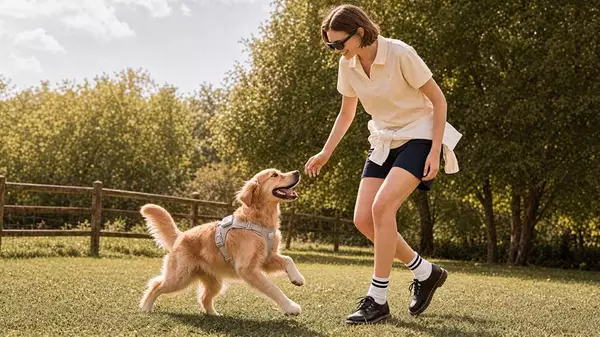
13 Common Dog Behaviors Explained by Science
Dogs have been humanity’s loyal companions for thousands of years. Their behaviors, both quirky and endearing, have intrigued and puzzled us since time immemorial. While some actions are simply traits passed down through their ancestors, others can indicate their emotional state or health. Understanding these behaviours not only strengthens our bond with our furry friends but also ensures their well-being. This article delves into 13 common dog behaviors and explains them through the lens of science.
13. Why Dogs Wag Their Tails
 Giora Sluzky, CC BY-SA 3.0 https://creativecommons.org/licenses/by-sa/3.0, via Wikimedia Commons
Dogs use their tails as a communication tool. While many believe that a wagging tail always indicates happiness, that’s a common misconception. The direction and speed of wagging can give clues about a dog’s emotions. Research suggests a wag to the right reflects positive feelings, such as excitement or contentment, while a tail wagged to the left may indicate fear or nervousness.
12. The Science Behind Barking
 Dog barking. Photo by Robert Gramner, via Unsplash
Barking is a dog’s primary means of vocal communication and can serve a multitude of purposes. From signaling danger to expressing excitement, barking is deeply embedded in a dog’s instinctual behavior. Studies show that the pitch, duration, and frequency of barks can communicate different messages, helping dogs to interact with both humans and other animals effectively.
11. Digging: A Behavior Rooted in Instinct
 Digging behaviour by Dog. Image via Unsplash
Whether it’s in your backyard or inside their bed, digging is a behavior that many dogs engage in. This can be traced back to their wild ancestors who dug to find food, create a den, or regulate temperature. Modern dogs may dig to bury toys or create a comfortable resting place, making it a natural and instinctive activity.
10. Understanding the Play Bow
 Play Bow behaviour by dog. Image via Unsplash
The play bow—a gesture where the dog lowers its front legs and raises its rear—is a universal invitation to play. Researchers have determined that this behavior helps clarify playful intentions, preventing misunderstandings that might lead to aggression among dogs. It’s their way of saying, “Let’s have fun!”
9. Why Dogs Chase Their Tails
 Tail chasing behavior of dog. Image via Pixabay
Tail chasing can be an amusing spectacle, but when excessive, it may signal underlying issues like boredom, anxiety, or even a medical condition like allergies. Scientific studies indicate that tail chasing can sometimes resemble compulsive behavior, further emphasizing the importance of understanding the context in which it occurs.
8. The Phenomenon of Head Tilting
 Head Tilting in Dog. Image via Unsplash
Many dog owners notice their pets tilting their heads during conversations. While it often appears as if they’re trying to understand us, research suggests it helps dogs better ascertain the origin of a sound, enhancing their auditory comprehension. This adorable behavior demonstrates their intent focus and engagement.
7. Sniffing and Its Importance
 Dog Sniffing. Image via Unsplash
A dog’s sense of smell is remarkably acute; they rely on it to interpret the world. Sniffing behaviors allow dogs to gather information about their environment, recognize familiar scents, and even detect changes in the emotional states of the beings around them. Scientific evidence supports that dogs’ olfactory receptors are vastly superior to humans’, emphasizing this behavior’s critical role in daily life.
6. Why Dogs Howl
 Dog howl. Image via Unsplash
Howling links modern dogs to their wolf ancestors, acting as a long-distance communication method to signal their presence or location. Domesticated dogs may howl in response to triggers like sirens or music or to seek attention and social connection. This behavior is both instinctive and adaptive, showcasing their evolutionary past.
5. The Significance of Pawing
 Dog Pawing. Image via Unsplash
When a dog paw reaches out, it often seeks interaction or attention. This behavior can stem from a desire for affection, food, or even a play session. Scientific analysis suggests that pawing is a form of tactile communication, reinforcing the social bonds between dogs and their human companions.
4. The Mystery of Zoomies
 Zoomies behaviour in dogs. Image via Unsplash
Known scientifically as Frenetic Random Activity Periods (FRAPs), zoomies are those bursts of energy where dogs race around at high speed. This behavior often occurs after baths, during playtime, or before bedtime and is a natural way for dogs to burn off excess energy, relieve stress, or simply express happiness.
3. Licking: An Instinctive Gesture
 Chocolate Lab licking its lips. Photo by James Barker, via Unsplash
Licking is a multi-faceted behavior that dogs use for grooming, affection, exploration, and healing wounds. The act of licking releases endorphins, which can soothe and comfort them. From a scientific viewpoint, licking can also be a tool for taste-testing or assessing the mood of those around them.
2. Understanding the Sleep Positions of Dogs
 Dog sleeping in Indonesia. Image by photonblast via Unsplash
Dogs’ sleeping positions can offer insights into their behavior and health. For instance, a curled-up position signifies self-preservation and comfort, mirroring wild behavior for warmth and protection. Conversely, sprawled-out positions often indicate comfort and a sense of security within their environment.
1. Dog Growling: A Complex Form of Communication
Dog Growling. Image via UnsplashGrowling often gets a bad reputation as an aggressive behavior, but it is primarily a form of communication. Dogs use growls to express discomfort, fear, or a warning. Scientific research encourages owners to acknowledge and respect this vocalization as it can prevent escalation and help address the root causes of distress.
In understanding these behaviors, we cultivate a more profound appreciation and connection with our canine companions. Recognizing the motivations behind their actions not only enhances our ability to care for them but also enriches the human-dog relationship, paving the way for a harmoniously shared life.
AboutLatest Posts相关知识
The Best Ways To Train Your Dog
Correcting Overactive Pets and Behavioral Issues: Scientific Training and Environmental Optimization
猫语翻译器
带CD宠物大狗可调节训狗项圈Perfect Dog Command Collar Large
Five Most Popular Dog Breeds In The US
犬最常见的三种呼吸系统疾病及自助治疗(The three most common respiratory diseases and self
【中商原版】永远的爱犬 120+食谱 + 让你的犬类伙伴年轻健康长寿的神奇科学 The Forever Dog Life 英文原版 Rodney Habib
The effect of frequency and sample shape on fatigue behaviors of DZ125 superalloy
Why is My Leopard Gecko Pale? (10 Common Reasons)
dog是什么意思
原文链接: 13 Common Dog Behaviors Explained by Science https://m.mcbbbk.com/newsview1328514.html
| 上一篇: 宠物狗点头行为解析 | 下一篇: 2025年11月北京宠物寄养,北... |